
This one is mostly for the benefit of Buzz.
Yes, apes are monkeys and therefore so are we. I’ve said it before and I’ve given my reasons, other biology types have said it and given their reasons, yet a crime against pedantry rages unabated.
... from Zygoma.
The author, PaoloV is in osteology, which means he might well be working with different primate species all the time, but I just can't bring myself to consider working with dead primates to being on the same footing as working with live primates. We all have our flaws.
Truthfully, the distinction between monkey and ape is a handy one to have. There are too many people I meet (smart people, too) who do not understand the vast difference between a chimpanzee and a spider monkey, thinking of them both as "monkeys." Maybe I ought to devote an entire Human Ethology post to this, but I don't think people are naturally inclined towards understanding the distinction between inclusive and non-inclusive sets. Its definitely easier to think, "okay they're closely related, but a monkey is one thing and an ape is another." And its even easier to think "anything that swings around and makes hooting noises is a monkey."
I really like the word "monkey," however. Its such a fun pair of syllables, so I would not be opposed to being given more opportunities to use the word. Its unfortunate that there the two main distinctions within are Old World and New World Monkeys. In that case, shouldn't we be assigned some kind of monkey subtitle?
In conclusion, I have no strong opinion one way or the other, though I may wind up changing the name of this blog to Lord of the Monkeys at some point, to promote greater journalistic integrity.
Friday, May 13


Monday, May 9
More Latest Stuffs on Altruism
At the time, I didn't write much about the Martin Nowab et al. paper which appeared in Nature about a year back, but it generated a bunch a hubbub mostly because everyone thought they were completely wrong.
I thought they were completely wrong, initially. Kin Selection is a wonderfully simple and elegant concept, that is honestly hard to imagine as possibly being wrong. Its too simple and fundamental. I also didn't want it to be wrong because it underlies many of my own core beliefs and personal theories (yes I admit I am allowing my confirmation bias to work here).
In all fairness, I still think they are wrong. I looked around in the months after the initial release, and was satisfied by the refutations from everyone else in the community.
Somehow, the topic came up again more recently and I went back to the original paper. I checked the supplementary materials, unsure if I had looked at them the first time.
I had not. They are almost an entirely new and different paper from the one that actually appears in print. I considered going through this monster 40+ page adversary and critiquing it page by page, but that seemed like it might become a full-time job for a few months, what with having to relearn all of Nowak's obscure mathematical presentations.
Then another article appeared in Science, about ROBOTS and simulations of kin selection in those models. Good read. Yet, Nowak's comment at the end reignited my ire. In orther sources, Nowak says that the critics aren't really going through all of their arguments no matter how many hundreds of scientists print that they're wrong. Its like he's some kind of avate-garde hipster scientist.
Truth be told, I really didn't want to be the one to "go through all their arguments," and very fortunately, someone else came close enough for my tastes, just recently, too.
Rousset and Leon actually tear away at the paper and its supplements, and, because their commentary was not published in Nature like that giant series from March, they can make some much needed criticisms of this article in context.
Rousset F, & Lion S (2011). Much ado about nothing: Nowak et al.'s charge against inclusive fitness theory. Journal of evolutionary biology PMID: 21457170
I thought they were completely wrong, initially. Kin Selection is a wonderfully simple and elegant concept, that is honestly hard to imagine as possibly being wrong. Its too simple and fundamental. I also didn't want it to be wrong because it underlies many of my own core beliefs and personal theories (yes I admit I am allowing my confirmation bias to work here).
In all fairness, I still think they are wrong. I looked around in the months after the initial release, and was satisfied by the refutations from everyone else in the community.
Somehow, the topic came up again more recently and I went back to the original paper. I checked the supplementary materials, unsure if I had looked at them the first time.
I had not. They are almost an entirely new and different paper from the one that actually appears in print. I considered going through this monster 40+ page adversary and critiquing it page by page, but that seemed like it might become a full-time job for a few months, what with having to relearn all of Nowak's obscure mathematical presentations.
Then another article appeared in Science, about ROBOTS and simulations of kin selection in those models. Good read. Yet, Nowak's comment at the end reignited my ire. In orther sources, Nowak says that the critics aren't really going through all of their arguments no matter how many hundreds of scientists print that they're wrong. Its like he's some kind of avate-garde hipster scientist.
Truth be told, I really didn't want to be the one to "go through all their arguments," and very fortunately, someone else came close enough for my tastes, just recently, too.
Rousset and Leon actually tear away at the paper and its supplements, and, because their commentary was not published in Nature like that giant series from March, they can make some much needed criticisms of this article in context.
"The format of the paper itself is an obstacle to scientific communication. The article has two parts: a short illustrated essay for the general reader and a 43-page online mathematical Appendix. Readers who are not mathematically inclined or simply short on time may be tempted to simply trust the authors and gauge the scientific value of the paper based on the ‘weight’ of the supplementary material or on the prestige of the authors."Thank you, Rousset and Leon. Regardless of the validity of the results, the paper's presentation is a travesty; a travesty that the authors were fully aware of. Devastating stuff, and I really hope everyone involved or even watching has learned a constructive lesson or two from this catastrophe. Now hopefully I can be satisfied that Nowak et al. have been properly refuted.
Rousset F, & Lion S (2011). Much ado about nothing: Nowak et al.'s charge against inclusive fitness theory. Journal of evolutionary biology PMID: 21457170
Tuesday, May 3
More Baboon Video
There's a new episode of Baboons with Bill Bailey out:
I also discovered that they're taking the eps down after a couple of weeks, so absolutely watch this one as soon as you have the time. Its mostly Da Gama baboons, but there's a few minutes of Tokai, featuring the young male, Clint.
That guy has got nothing. I ought to feel sorry for him since the troop he comes from is overloaded with males, and he's the youngest and smallest out of them, but he never made himself stand out. There are some pretty exceptional young baboons in that troop, if I may say so myself... More on that later.
I don't like the guy much, but my bet is still on Dani.
I also discovered that they're taking the eps down after a couple of weeks, so absolutely watch this one as soon as you have the time. Its mostly Da Gama baboons, but there's a few minutes of Tokai, featuring the young male, Clint.
That guy has got nothing. I ought to feel sorry for him since the troop he comes from is overloaded with males, and he's the youngest and smallest out of them, but he never made himself stand out. There are some pretty exceptional young baboons in that troop, if I may say so myself... More on that later.
I don't like the guy much, but my bet is still on Dani.
Thursday, April 28
Queen me?
I'm in the process of writing a paper concerning the ecology and industry of American bison (meat), so my writing engine is low on fuel.
But, a friend sent me this article about bees that I have found myself suprisingly pleased with. Sure, its about insects, but for someone who doesn't spend much time reading entomology papers, it can be rather refreshing. Plus, I would not dream of understating the importance of entomology to the development of the fields of ethology and sociobiology. The fact that I learned about the paper via theNewScientist is less forgivable.
I honestly had no idea how Queens became differetiated from other bees, we just didn't even get into it in Animal Behavior, other than a brief discussion of "royal jelly" which came across almost as an old wives' tale. These folks are lucky that they found such a clear effect from a single compound. A single author, too... most impressive. So, how do Queens come to be in ants, termites, and other eusocial insects?
Anyway, there's your dose of 'real' ethology; the only one you'll get from me for the foreseeable future.
But, a friend sent me this article about bees that I have found myself suprisingly pleased with. Sure, its about insects, but for someone who doesn't spend much time reading entomology papers, it can be rather refreshing. Plus, I would not dream of understating the importance of entomology to the development of the fields of ethology and sociobiology. The fact that I learned about the paper via theNewScientist is less forgivable.
I honestly had no idea how Queens became differetiated from other bees, we just didn't even get into it in Animal Behavior, other than a brief discussion of "royal jelly" which came across almost as an old wives' tale. These folks are lucky that they found such a clear effect from a single compound. A single author, too... most impressive. So, how do Queens come to be in ants, termites, and other eusocial insects?
Anyway, there's your dose of 'real' ethology; the only one you'll get from me for the foreseeable future.
Wednesday, April 20
Every primate's a little bit prejudiced
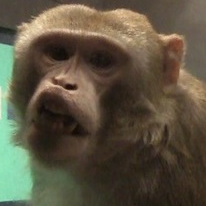
Scientific American covered a new article out in the Journal of Personality and Social Psychology which asks an interesting question, of a sort that is not asked nearly enough, in my opinion. Are our biases and attitudes towards other social groups, and within our own group, uniquely human? Do our strategies arise from experiences which no other species can match?
The answer provided by Neha Mahajan, Laurie Santos and colleagues is no.
Once does the SciAm article mentioned "racism," but its in their subtitle. They shouldn't have done this. This cannot be shown to be racism, not under the current conditions. If some sort of morphological or genetic analysis was performed, then maybe they could make this claim. But all the associations in this research are social, not biological. Unless you believe race is a purely social institution, but people have known for a while that its just not that simple.
The true question is easily found in the abstract, and I've paraphrased it above. Did SciAm have access to the full length article, and I missing something with just the abstract? I assume so, though it is rather odd for their link to take the reader to an abstract with no sign of the full text. Even with my various University sources, I couldn't manage to obtain access to this article. So all I have to go by is the abstract, same as you. Ultimately, even if I wanted to, I couldn't write a critical assessment of the source document.
Thus ends this cautionary tale. I am all in favor of more research like this, and other research which truly investigates the genetic basis for ethnic group biases. However, the story of race, genetics, and scientific inquiry is a troubled one. One SciAm article isn't a huge deal, but it demonstrates how easy it is to make little mistakes, and the pursuit of knowledge in this discipline is a razor thin line which must be carefully walked. Otherwise, unfortunate things can happen.
The answer provided by Neha Mahajan, Laurie Santos and colleagues is no.
"We found the first evidence that a nonhuman species automatically distinguishes the faces of members of its own social group from those in other groups and displays greater vigilance toward outgroup members . . . macaques spontaneously associate novel objects with specific social groups and display greater vigilance to objects associated with outgroup members . . . and we discovered that macaques, like humans, automatically evaluate ingroup members positively and outgroup members negatively."I won't lie, this is some really intriguing stuff. You can read all this and more on the details in SciAm's article, and I hate to rehash thing that have already been said. Rather, I'd like to switch attention to the spin which SciAm puts on this article in their own report.
Once does the SciAm article mentioned "racism," but its in their subtitle. They shouldn't have done this. This cannot be shown to be racism, not under the current conditions. If some sort of morphological or genetic analysis was performed, then maybe they could make this claim. But all the associations in this research are social, not biological. Unless you believe race is a purely social institution, but people have known for a while that its just not that simple.
The true question is easily found in the abstract, and I've paraphrased it above. Did SciAm have access to the full length article, and I missing something with just the abstract? I assume so, though it is rather odd for their link to take the reader to an abstract with no sign of the full text. Even with my various University sources, I couldn't manage to obtain access to this article. So all I have to go by is the abstract, same as you. Ultimately, even if I wanted to, I couldn't write a critical assessment of the source document.
Thus ends this cautionary tale. I am all in favor of more research like this, and other research which truly investigates the genetic basis for ethnic group biases. However, the story of race, genetics, and scientific inquiry is a troubled one. One SciAm article isn't a huge deal, but it demonstrates how easy it is to make little mistakes, and the pursuit of knowledge in this discipline is a razor thin line which must be carefully walked. Otherwise, unfortunate things can happen.
Thursday, April 14
My monkeys are famous on the internet!
Okay not really. Not yet. There's only a few hundred views at time of this posting. But its TV! Real... British TV...
Another thing about this video is that its quite recent. Not so recent as Fred's untimely demise, as that baboon plays a major role in this video. Its quite a good video, too, comapred to the media I'm used to seeing surrounding these baboons. Bill Bailey doesn't make any judgements on what the baboons are doing, and he mostly chastises humans for being clearly dumb and not protecting their valuables. There are several minor errors, and more than a few leaps to conclusions, but that is The Science talking.
The Tokai troop in this video is my troop, though. You won't recognize the names because they have been changed to protect the innocent. Though one of these days I may reveal the unadulterated truth of these baboon tales. Dani's certainly grown into the hide and build of an alpha male, though.
There are some oddities (minor errors, perhaps, as I alluded to earlier), which I could go on about for pages, but I'll stick to some of the more interesting ones. Bailey implies that the Smitz baboons know that the whales are why the humans come to that area. I won't rule out the possibility that they might be doing this, but Occam's Razor suggest otherwise. Have a look at the terrain - its steep fynbos all around. That troop doesn't need to know about whales or the whale watching season, they only need to know that foolish humans with food tend to congregate along that coast line on a regular basis. Then they can peer down from where they might sleep on the outcroppings and see if the humans are lining up as easy pickings on any given day.
In Tokai, Whitey is far from the oldest female around. She wasn't even one of the females I included in the Old Ladies Club. The leg injury is not likely to be permanent. There is a Limper in the other troop, who I figured would recover, but simply never did, however, so Whitey might be stuck that way. Hard to say. As the film shows, and as I always say, being a female baboon is rough. Easy work for the filmmakers, on the other hand; there is a good chance that any day they were to come by, one of the big males would pick on one of the females. I did like the fact that Bailey acted properly confused as to what particular reason Dani had for chasing Berta on this particular day.
Even if you don't care for the narration, the footage is some of the best (and longest) you'll find anywhere. Definitely worth the watch. It would have been worth it just for that shot of Stettler, sitting in the forest. The old man always was my favorite.
Another thing about this video is that its quite recent. Not so recent as Fred's untimely demise, as that baboon plays a major role in this video. Its quite a good video, too, comapred to the media I'm used to seeing surrounding these baboons. Bill Bailey doesn't make any judgements on what the baboons are doing, and he mostly chastises humans for being clearly dumb and not protecting their valuables. There are several minor errors, and more than a few leaps to conclusions, but that is The Science talking.
The Tokai troop in this video is my troop, though. You won't recognize the names because they have been changed to protect the innocent. Though one of these days I may reveal the unadulterated truth of these baboon tales. Dani's certainly grown into the hide and build of an alpha male, though.
There are some oddities (minor errors, perhaps, as I alluded to earlier), which I could go on about for pages, but I'll stick to some of the more interesting ones. Bailey implies that the Smitz baboons know that the whales are why the humans come to that area. I won't rule out the possibility that they might be doing this, but Occam's Razor suggest otherwise. Have a look at the terrain - its steep fynbos all around. That troop doesn't need to know about whales or the whale watching season, they only need to know that foolish humans with food tend to congregate along that coast line on a regular basis. Then they can peer down from where they might sleep on the outcroppings and see if the humans are lining up as easy pickings on any given day.
In Tokai, Whitey is far from the oldest female around. She wasn't even one of the females I included in the Old Ladies Club. The leg injury is not likely to be permanent. There is a Limper in the other troop, who I figured would recover, but simply never did, however, so Whitey might be stuck that way. Hard to say. As the film shows, and as I always say, being a female baboon is rough. Easy work for the filmmakers, on the other hand; there is a good chance that any day they were to come by, one of the big males would pick on one of the females. I did like the fact that Bailey acted properly confused as to what particular reason Dani had for chasing Berta on this particular day.
Even if you don't care for the narration, the footage is some of the best (and longest) you'll find anywhere. Definitely worth the watch. It would have been worth it just for that shot of Stettler, sitting in the forest. The old man always was my favorite.
Wednesday, March 30
A Solemn Farewell
South Africa Euthanizes Well-Known Baboon
CAPE TOWN, South Africa (AP) — South African officials said Friday that they had euthanized the country's most famous baboon, known as Fred, who was well-known for raiding cars and frightening tourists along Cape Town's scenic route. Read more...
I didn't know Fred. I know a different baboon by that name, which was pure coincidence. Our baboons generally had odd names, which is what happens when someone lets me name anything. On the other hand, there is a cohort of well-known males scattered around the Cape Peninsula, with simple, friendly names like Fred, David, George, and Erik.
Right there is one place this story goes odd. As far as I have ever known, Erik is the most famous male baboon on the Cape Peninsula, since he is incredibly old, but quite active, and apparently manages to maintain legitimate alpha male status among his troop (I've heard that from sources I actually probably can trust), despite being over 20. See, that's old.
Calling Fred a "ringleader" was an odd choice. I suppose that could makes sense from a troop mind perspective, but I'm sure that wasn't what was running through the author's mind when he wrote it. I suppose that the paragraph is technically not incorrect, but they sure made the event sound like some kind of tactical black ops mission:
However, if opening car doors truly was Fred's signature move, then I might have seen him on one of his raids while driving past Simon's Town. A large male opened someone's back door and stole their sandwich and bag of crisps. On the other hand, I've seen an awful lot of baboons try (and sometimes succeed at) opening car doors, so I would not consider this behavior to be any baboon's signature.
Nevertheless, it is as the baboon management group says, "this baboon's demise can be contributed mainly to the continuous misguided efforts by humans to befriend and feed baboons." See you space... monkey.
CAPE TOWN, South Africa (AP) — South African officials said Friday that they had euthanized the country's most famous baboon, known as Fred, who was well-known for raiding cars and frightening tourists along Cape Town's scenic route. Read more...
I didn't know Fred. I know a different baboon by that name, which was pure coincidence. Our baboons generally had odd names, which is what happens when someone lets me name anything. On the other hand, there is a cohort of well-known males scattered around the Cape Peninsula, with simple, friendly names like Fred, David, George, and Erik.
Right there is one place this story goes odd. As far as I have ever known, Erik is the most famous male baboon on the Cape Peninsula, since he is incredibly old, but quite active, and apparently manages to maintain legitimate alpha male status among his troop (I've heard that from sources I actually probably can trust), despite being over 20. See, that's old.
Calling Fred a "ringleader" was an odd choice. I suppose that could makes sense from a troop mind perspective, but I'm sure that wasn't what was running through the author's mind when he wrote it. I suppose that the paragraph is technically not incorrect, but they sure made the event sound like some kind of tactical black ops mission:
"In 2009, Fred led a group of 29 baboons in a four-car raid outside Simon's Town, a small coastal neighborhood. The baboon chief used his signature tactic of opening unlocked doors and jumping through windows to search for food, while the rest looked for access inside from car roofs and hoods."Last time was in 2009? I assure you those baboons raided much more recently than that. Its such an odd paragraph for anyone who knows anything. Its like the author googled "Fred baboon Cape Town" and only looked at the first news result that cropped up.
However, if opening car doors truly was Fred's signature move, then I might have seen him on one of his raids while driving past Simon's Town. A large male opened someone's back door and stole their sandwich and bag of crisps. On the other hand, I've seen an awful lot of baboons try (and sometimes succeed at) opening car doors, so I would not consider this behavior to be any baboon's signature.
Nevertheless, it is as the baboon management group says, "this baboon's demise can be contributed mainly to the continuous misguided efforts by humans to befriend and feed baboons." See you space... monkey.
Thursday, March 24
Troop Mind Journal 03/23
The troop mind is assumed to take form at some unclear point in the morning. When the baboons are starting to wake up, a few are on the ground, the important individuals in the troop are getting a feel for what kind of day it is going to be, I like to think that is when this primitive consciousness begins to congeal.
But what if they spend the night right next to another troop?
Just such a thing has happened in the forest a small number of times. On this particular day, the morning opened with restlessness. We weren’t quite sure what was going down at this point, but the truth quickly became apparent. When the main troop rushed down from the sleeping site and immediately headed for the feeding site, and the forest erupted into wahoos and screams, I headed up the hill to investigate.
I found an odd collection of baboons holding the frontier. There were 4 of them: Punzle, Cassandra, Danny, and Kirby. Punzle is well known to us, but none of the others have come up yet.
Kirby is no one too special. He’s an older juvenile, on the verge of being sub-adult. He’s recognizable by torn up ears, and long black side hairs on his head, which he probably inherited from one of the matrilines. He’s not the friendliest of young males, but few of them are at that age. He’s smack in his ‘tween years, where the excitability and extroversion of youth are giving way to the aggressiveness and seriousness of maturity. Right in the middle, their behavior is frequently dominated by extroversion and aggressiveness; the worst of both worlds.
Cassandra and Danny are both special baboons to me. Cassie isn’t particularly remarkable on the surface: she’s a mid-to-low ranking baboon, not too young, or sociable. But she’s a good mother, she doesn’t let her babies get themselves killed. She is also the first baboon female I nailed the identification for. She’s got the black hairs I mentioned earlier, and these highly distinctive half-moon patches on her callosities. Well, I can reliably see them, anyway.
Danny is a young male, a legitimate sub-adult. He’s also a surprisingly nice guy. He doesn’t let himself get pushed around by any but the likes of Aaron and Damian, but he’s not abusive to the females, either. Or us researchers. He’s young, but he looks like he’ll turn into a strong alpha one day, who’s liable to be as benevolent as a male can get.
These four stood there, at the far edge of the group, and alone, appeared to push the entirety of the Tim Curry group up the hill, and out of the sleeping site. The remainder of the main troop continued down hill, across the valley, toward the sleeping site. The four did not back down and rejoin their troop until a couple hundred meters had been allowed to open between the centers of the two groups.
It was not surprising to see Danny and Kirby at the edge. They’re young males and eventually looking to disperse to another troop where they can copulate with some more diverse females. They want to know as much as possible about what other troops are in the area. The strangest part was the lack of other young males at the edge.
The two females were the true oddity, however. I can’t think of reason why Cassie would like to risk harm; she doesn’t have a posse to back her up. Punzle does, in theory, but as the number 3 female, it surprising she wasn’t herded to safety by Aaron. The incident was a mess, and did not last very long, but the major outstanding question has remained: why were there so many females at the periphery, and so few young males?
Returning to where we began, when does this troop mind decision begin to form? The baboons are almost certainly aware of the presence of Tim Curry & Co. when they sit back to rest for the night. Could Tim Curry have arrived later at night after the main troop has nodded off? Considering all the experiments that have been done to show the impressive perception and awareness of a baboon troop, I could hardly allow myself to believe that an entire dysfunctional troop of baboons could just slip under the main troop’s radar.
I can sometimes tell, when I find the baboons arriving late to a sleeping site, that something is up. If there’s an excessive amount of screaming, barking, and wahooing, it will often indicate something is amiss. If I’m having a really outstanding evening, I’ll be able to recognize at least 5 distinct wahoos, which is a strong indicator that there’s more than one troop present, since the main troop only has 4 males capable of producing a solid wahoo. Still, that late in the evening, one seldom has enough light to distinguish baboons well enough to spot someone who is out of place.
So I have my hunches, which are more often correct than not. The baboons, on the other hand, must know. Then when does the decision take place? As Danny nods off into light sleep, is he thinking about how the first thing he’s going to do tomorrow is chase those crazy Tim Curry baboons out of the sleeping site? Did Aaron not think about his plan the next day, and thus allow Punzle to slip past his notice? Did Anna have some plan in mind overnight? Was it just the luck of the draw for her, and she wound up sleeping in a tree right by where Tim Curry slept?
All of these questions, and more, will not be answered next week on this blog, but I did find an excellent complementary story which happens not to shed light on anything.
But what if they spend the night right next to another troop?
Just such a thing has happened in the forest a small number of times. On this particular day, the morning opened with restlessness. We weren’t quite sure what was going down at this point, but the truth quickly became apparent. When the main troop rushed down from the sleeping site and immediately headed for the feeding site, and the forest erupted into wahoos and screams, I headed up the hill to investigate.
I found an odd collection of baboons holding the frontier. There were 4 of them: Punzle, Cassandra, Danny, and Kirby. Punzle is well known to us, but none of the others have come up yet.
Kirby is no one too special. He’s an older juvenile, on the verge of being sub-adult. He’s recognizable by torn up ears, and long black side hairs on his head, which he probably inherited from one of the matrilines. He’s not the friendliest of young males, but few of them are at that age. He’s smack in his ‘tween years, where the excitability and extroversion of youth are giving way to the aggressiveness and seriousness of maturity. Right in the middle, their behavior is frequently dominated by extroversion and aggressiveness; the worst of both worlds.
Cassandra and Danny are both special baboons to me. Cassie isn’t particularly remarkable on the surface: she’s a mid-to-low ranking baboon, not too young, or sociable. But she’s a good mother, she doesn’t let her babies get themselves killed. She is also the first baboon female I nailed the identification for. She’s got the black hairs I mentioned earlier, and these highly distinctive half-moon patches on her callosities. Well, I can reliably see them, anyway.
Danny is a young male, a legitimate sub-adult. He’s also a surprisingly nice guy. He doesn’t let himself get pushed around by any but the likes of Aaron and Damian, but he’s not abusive to the females, either. Or us researchers. He’s young, but he looks like he’ll turn into a strong alpha one day, who’s liable to be as benevolent as a male can get.
These four stood there, at the far edge of the group, and alone, appeared to push the entirety of the Tim Curry group up the hill, and out of the sleeping site. The remainder of the main troop continued down hill, across the valley, toward the sleeping site. The four did not back down and rejoin their troop until a couple hundred meters had been allowed to open between the centers of the two groups.
It was not surprising to see Danny and Kirby at the edge. They’re young males and eventually looking to disperse to another troop where they can copulate with some more diverse females. They want to know as much as possible about what other troops are in the area. The strangest part was the lack of other young males at the edge.
The two females were the true oddity, however. I can’t think of reason why Cassie would like to risk harm; she doesn’t have a posse to back her up. Punzle does, in theory, but as the number 3 female, it surprising she wasn’t herded to safety by Aaron. The incident was a mess, and did not last very long, but the major outstanding question has remained: why were there so many females at the periphery, and so few young males?
Returning to where we began, when does this troop mind decision begin to form? The baboons are almost certainly aware of the presence of Tim Curry & Co. when they sit back to rest for the night. Could Tim Curry have arrived later at night after the main troop has nodded off? Considering all the experiments that have been done to show the impressive perception and awareness of a baboon troop, I could hardly allow myself to believe that an entire dysfunctional troop of baboons could just slip under the main troop’s radar.
I can sometimes tell, when I find the baboons arriving late to a sleeping site, that something is up. If there’s an excessive amount of screaming, barking, and wahooing, it will often indicate something is amiss. If I’m having a really outstanding evening, I’ll be able to recognize at least 5 distinct wahoos, which is a strong indicator that there’s more than one troop present, since the main troop only has 4 males capable of producing a solid wahoo. Still, that late in the evening, one seldom has enough light to distinguish baboons well enough to spot someone who is out of place.
So I have my hunches, which are more often correct than not. The baboons, on the other hand, must know. Then when does the decision take place? As Danny nods off into light sleep, is he thinking about how the first thing he’s going to do tomorrow is chase those crazy Tim Curry baboons out of the sleeping site? Did Aaron not think about his plan the next day, and thus allow Punzle to slip past his notice? Did Anna have some plan in mind overnight? Was it just the luck of the draw for her, and she wound up sleeping in a tree right by where Tim Curry slept?
All of these questions, and more, will not be answered next week on this blog, but I did find an excellent complementary story which happens not to shed light on anything.
Monday, March 14
Human Ethology: On Social Networking
I dislike the Facebook (tFB) - that's no secret. One reason is because of this fascinating article about demographics of populations who use different social networking sites. But the real reason is because I'm not on board with the "social networking is the future (of innovation/interaction/huuurgle/etc )" crew is that I just happen to think that its unproductive and unhealthy. Don't get me wrong, I'm from the Internet, and I even am willing to agree that moderate levels of internet browsing helps with work. Hell, I won't even deny that maybe tFB is the future. But that doesn't mean I'm going to say its a good thing. Have a look back at my previous Human Ethology writings: in short tFB isn't friendly with our ethology. Sucks, I know.
The reason I bring this up is because a short while ago, I was linked to an article about how tFB is bad news for people's self-esteem. Aha! I thought to myself, Now that's what to see, meaning either my hunches are getting confirmed, or tFB is not only meritless, but a legitimately negative insitution!
Then I was reading one of my blogs the other day, and was surprised to find myself reading an article which spoke of a recently published paper which indicated that tFB improves one's self-esteem. Now this provides a bit of a conundrum worth investigation, I thought.
Well, let's first have a gander at the more recent of the two. This "mirror, mirror" article is obviously about self-esteem derived from looking at images of one's self. The real-life test is, incredibly enough, having subjects look at themselves in a mirror. Okay. And on theFaceBook? Looking at your own profile.
So the results imply that one gains more self-esteem looking at one's own self-generated profile than ones "physical" profile. This immediately comes back to the dichotomy of stated versus revealed preference. A person's tFB profile is stated information, it is written by the individual according to their choices and beliefs. A mirror reflection is revealing information, it tells no lies, unless one is wearing makeup.
That's all well and good, but the authors, or at very least, the press, would argue that these findings suggest that tFB use in general is better for one's self-esteem than living in the real-world.
Slight problem: I may not be an average tFB user (in fact I hope that I am not), but I don't spend a lot of time looking at my profile. Particularly under the newest layout, its awfully difficult for anyone to easily see the complete contents of one's profile. What's allegedly the best part about tFB, and certainly what takes up most people's time, are the status updates, photos, quizzes, games, etc. Dealing with other people is what takes up the majority of time spent on tFB.
Which is where the original paper comes back into play. Except not as much as you would think. The TIME article, from which I was lead to the scholarly paper, strongly implied that people were more miserable on tFB.
Yet,the actual overview of the paper tells a different tale:
Blogger seldom angers me in a substantial way, but when it deletes my whole post for reasons I do not comprehend and refuses to let me undo, I get mad. And delayed. Everything should have a built in revisioning system.
By the time I realized what was going on while I was reading the articles and writing this post the first time around, it was "too late." There's not more to be said on the relevance of these two articles. "Mirror, Mirror" is limited by its odd assumption about the importance of profile information and viewing, and "Misery," while a solid paper in its own right, doesn't actually gather any evidence directly related to tFB activities.
The two can hardly be compared under the circumstances. Thus, the moral remaining with us: the press is a difficult creature to interact with.
Read the actual papers, and if you can't do that, at least real the abstracts. I skim a lot of papers, read quite few, since so many pass across my desk, but I will always read the abstracts. From the abstract of "Misery":
The reason I bring this up is because a short while ago, I was linked to an article about how tFB is bad news for people's self-esteem. Aha! I thought to myself, Now that's what to see, meaning either my hunches are getting confirmed, or tFB is not only meritless, but a legitimately negative insitution!
Then I was reading one of my blogs the other day, and was surprised to find myself reading an article which spoke of a recently published paper which indicated that tFB improves one's self-esteem. Now this provides a bit of a conundrum worth investigation, I thought.
Well, let's first have a gander at the more recent of the two. This "mirror, mirror" article is obviously about self-esteem derived from looking at images of one's self. The real-life test is, incredibly enough, having subjects look at themselves in a mirror. Okay. And on theFaceBook? Looking at your own profile.
So the results imply that one gains more self-esteem looking at one's own self-generated profile than ones "physical" profile. This immediately comes back to the dichotomy of stated versus revealed preference. A person's tFB profile is stated information, it is written by the individual according to their choices and beliefs. A mirror reflection is revealing information, it tells no lies, unless one is wearing makeup.
That's all well and good, but the authors, or at very least, the press, would argue that these findings suggest that tFB use in general is better for one's self-esteem than living in the real-world.
Slight problem: I may not be an average tFB user (in fact I hope that I am not), but I don't spend a lot of time looking at my profile. Particularly under the newest layout, its awfully difficult for anyone to easily see the complete contents of one's profile. What's allegedly the best part about tFB, and certainly what takes up most people's time, are the status updates, photos, quizzes, games, etc. Dealing with other people is what takes up the majority of time spent on tFB.
Which is where the original paper comes back into play. Except not as much as you would think. The TIME article, from which I was lead to the scholarly paper, strongly implied that people were more miserable on tFB.
Yet,the actual overview of the paper tells a different tale:
"In a series of five experiments, the study— which was inspired by the Facebook envy experience though does not explicitly address it— identified several intersecting psychological factors that underlie the grass-is-greener phenomenon. The first two experiments showed that people consistently underestimate how often other people have negative emotions, while overestimating how often they have positive ones."Emphasis mine. Well then.
Blogger seldom angers me in a substantial way, but when it deletes my whole post for reasons I do not comprehend and refuses to let me undo, I get mad. And delayed. Everything should have a built in revisioning system.
By the time I realized what was going on while I was reading the articles and writing this post the first time around, it was "too late." There's not more to be said on the relevance of these two articles. "Mirror, Mirror" is limited by its odd assumption about the importance of profile information and viewing, and "Misery," while a solid paper in its own right, doesn't actually gather any evidence directly related to tFB activities.
The two can hardly be compared under the circumstances. Thus, the moral remaining with us: the press is a difficult creature to interact with.
Read the actual papers, and if you can't do that, at least real the abstracts. I skim a lot of papers, read quite few, since so many pass across my desk, but I will always read the abstracts. From the abstract of "Misery":
"Taken together, these studies suggest that people may think they are more alone in their emotional difficulties than they really are."That's quite a finding, regardless of not being directly tied to tFB. Ehh, it didn't deserve the attention anyway.
Wednesday, March 2
Sorority?
Last time I promised that I would elaborate on the situation I presented last time, namely, Gertrude and Hilda. To my trained but imperfect human eyes the two look like sisters. As an exercise, let's assume that they are. But if they are, how and why do they appear to differ so greatly in rank?
A few things first. If the two are sisters, they are almost certainly not full sisters, they probably only share one parent. This I shall assume, as males generally do not maintain their rank long enough for a single copulatory pair to make it through two pregnancies. This would also require Gertie and Hilda be born one after the other; there are just too many unlikely aspects to such a setup. Thus we'll assume they shared only one parents, but which parent will prove to be an interesting question.
Sharing a mother between the two sisters is problematic. If this were to be the case, the mother would need to be quite highly ranked, to explain Hilda's own rank. Gertrude's low rank is less of a problem this way - female's can lose a great deal of rank much more easily than they can gain rank. So under this scenario, how does Gertie lose all of her ranks?
Alright, we don't really know enough about Gertrude's rank to say where she's fallen to. Maybe she never really collapsed, maybe she just got super old and couldn't protect herself, or developed some disease which makes her weak. Even though males are the sex whose rank is primarily based on pure strength, and females can rely on the cushion of their matriline, they still need to be able to protect themselves. in truth, Gertie is very seldom bothered by anyone because she stays out of the way and is no longer sexually receptive. In theory she could still hold a high rank, but just doesn't make use of it.
What if they shared the same father? Well, an alpha male is likely to mate with the top rank females, and create progeny of high rank, like Hilda. However, males are never long in the alpha spot. An up and coming male may have joined a troop and impregnated a mid-to-low rank female, and several years later, having risen to alpha status, impregnated a high ranking female who in turn gave birth to Hilda.
On the other hand, a low ranking, but clever male may have regularly mated with low ranked females, but slipped in a few sneaky, extra-pair copulations with a high ranking one, and one such copulation might happened to have yielded a successfully pregnancy. This isn't a terribly likely option, but either scenario would give us Gertrude and Hilda as they are today.
So there you have it, a wealth of different ethologically sound (I swear) explanations for how two old sister baboons ended up in such different places in the autumn of their lives.
A few things first. If the two are sisters, they are almost certainly not full sisters, they probably only share one parent. This I shall assume, as males generally do not maintain their rank long enough for a single copulatory pair to make it through two pregnancies. This would also require Gertie and Hilda be born one after the other; there are just too many unlikely aspects to such a setup. Thus we'll assume they shared only one parents, but which parent will prove to be an interesting question.
Sharing a mother between the two sisters is problematic. If this were to be the case, the mother would need to be quite highly ranked, to explain Hilda's own rank. Gertrude's low rank is less of a problem this way - female's can lose a great deal of rank much more easily than they can gain rank. So under this scenario, how does Gertie lose all of her ranks?
Alright, we don't really know enough about Gertrude's rank to say where she's fallen to. Maybe she never really collapsed, maybe she just got super old and couldn't protect herself, or developed some disease which makes her weak. Even though males are the sex whose rank is primarily based on pure strength, and females can rely on the cushion of their matriline, they still need to be able to protect themselves. in truth, Gertie is very seldom bothered by anyone because she stays out of the way and is no longer sexually receptive. In theory she could still hold a high rank, but just doesn't make use of it.
What if they shared the same father? Well, an alpha male is likely to mate with the top rank females, and create progeny of high rank, like Hilda. However, males are never long in the alpha spot. An up and coming male may have joined a troop and impregnated a mid-to-low rank female, and several years later, having risen to alpha status, impregnated a high ranking female who in turn gave birth to Hilda.
On the other hand, a low ranking, but clever male may have regularly mated with low ranked females, but slipped in a few sneaky, extra-pair copulations with a high ranking one, and one such copulation might happened to have yielded a successfully pregnancy. This isn't a terribly likely option, but either scenario would give us Gertrude and Hilda as they are today.
So there you have it, a wealth of different ethologically sound (I swear) explanations for how two old sister baboons ended up in such different places in the autumn of their lives.
Subscribe to:
Posts (Atom)

 Posts
Posts


